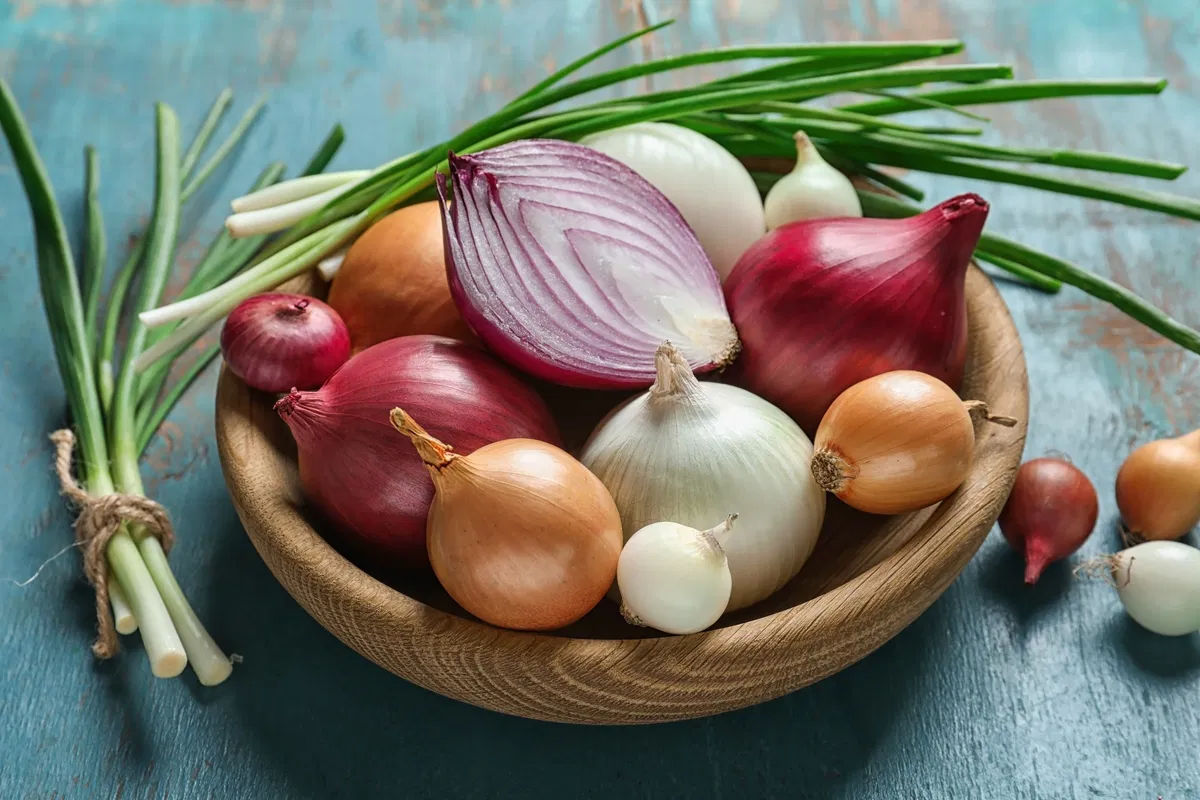
Dry onion is a fundamental food that has held an important place in both traditional medicine and daily nutrition for centuries. Thanks to the vitamins, minerals, and biologically active compounds it contains, it has multifaceted effects on human health. When consumed regularly and in balanced amounts, it offers positive contributions ranging from immune system support to cardiovascular health.
One of the most notable properties of dry onion is its strong antioxidant content. In particular, a flavonoid called quercetin helps combat free radicals and reduce cellular damage. This effect may contribute to slowing the aging process and lowering the risk of certain chronic diseases. In addition, dry onion is rich in vitamin C, which supports the immune system and increases the body’s resistance to infections.
From the perspective of digestive health, dry onion is an important source of dietary fiber. The prebiotic fibers it contains support the growth of beneficial bacteria in the intestines. This helps regulate digestion, prevent constipation, and improve overall gut health. Moreover, its potential role in balancing stomach acid may help reduce indigestion complaints in some individuals.
Dry onion also has positive effects on heart and vascular health. The sulfur-containing compounds and flavonoids it provides may help reduce levels of bad cholesterol (LDL) and maintain the elasticity of blood vessels. This plays a supportive role in lowering the risk of cardiovascular diseases such as heart attack and stroke. Additionally, its ability to reduce the tendency of blood to clot contributes to healthier circulation.
In terms of blood sugar control, dry onion is a noteworthy food. Some studies suggest that onion consumption may increase insulin sensitivity and help regulate blood glucose levels. This characteristic makes dry onion particularly valuable for individuals at risk of diabetes when included as part of a balanced diet.
Finally, the antibacterial and anti-inflammatory properties of dry onion are also significant for health. These properties may help reduce inflammation in the body and provide natural protection against certain infections. Considering all these benefits, dry onion can be regarded as an essential component of a healthy and balanced nutritional program.
One of the most notable properties of dry onion is its strong antioxidant content. In particular, a flavonoid called quercetin helps combat free radicals and reduce cellular damage. This effect may contribute to slowing the aging process and lowering the risk of certain chronic diseases. In addition, dry onion is rich in vitamin C, which supports the immune system and increases the body’s resistance to infections.
From the perspective of digestive health, dry onion is an important source of dietary fiber. The prebiotic fibers it contains support the growth of beneficial bacteria in the intestines. This helps regulate digestion, prevent constipation, and improve overall gut health. Moreover, its potential role in balancing stomach acid may help reduce indigestion complaints in some individuals.
Dry onion also has positive effects on heart and vascular health. The sulfur-containing compounds and flavonoids it provides may help reduce levels of bad cholesterol (LDL) and maintain the elasticity of blood vessels. This plays a supportive role in lowering the risk of cardiovascular diseases such as heart attack and stroke. Additionally, its ability to reduce the tendency of blood to clot contributes to healthier circulation.
In terms of blood sugar control, dry onion is a noteworthy food. Some studies suggest that onion consumption may increase insulin sensitivity and help regulate blood glucose levels. This characteristic makes dry onion particularly valuable for individuals at risk of diabetes when included as part of a balanced diet.
Finally, the antibacterial and anti-inflammatory properties of dry onion are also significant for health. These properties may help reduce inflammation in the body and provide natural protection against certain infections. Considering all these benefits, dry onion can be regarded as an essential component of a healthy and balanced nutritional program.