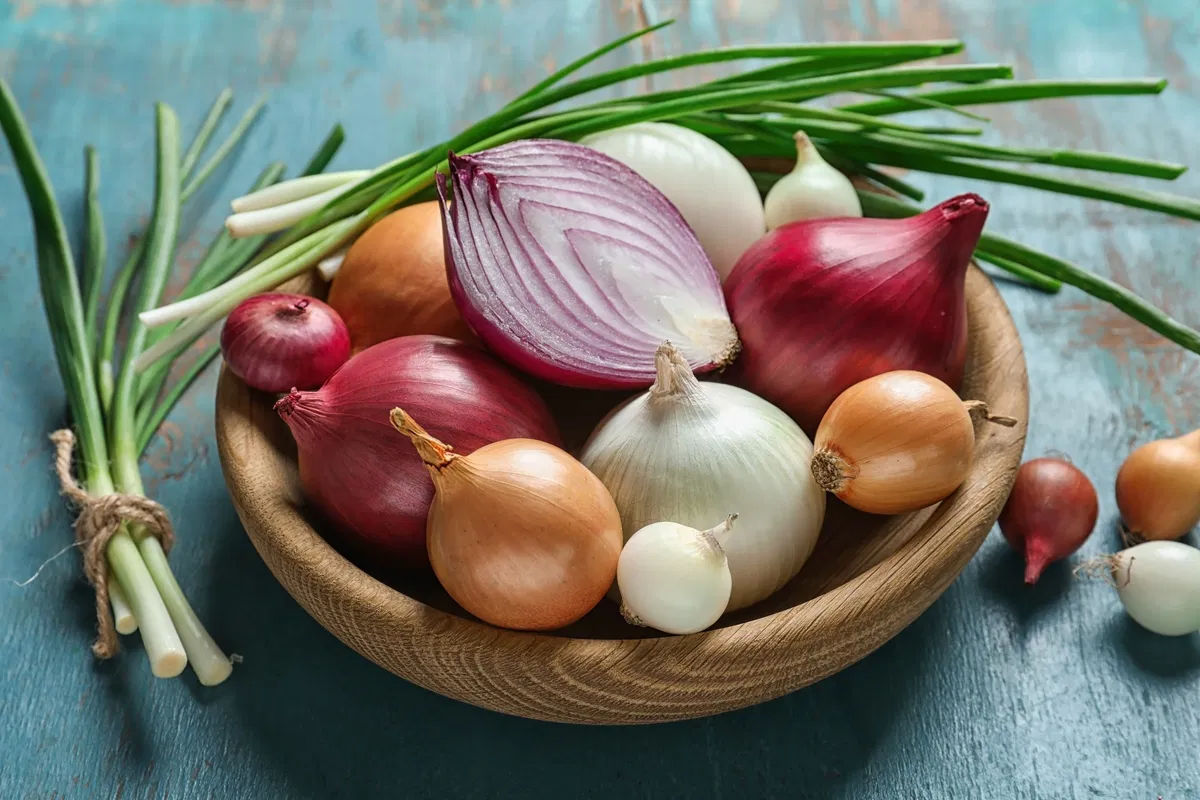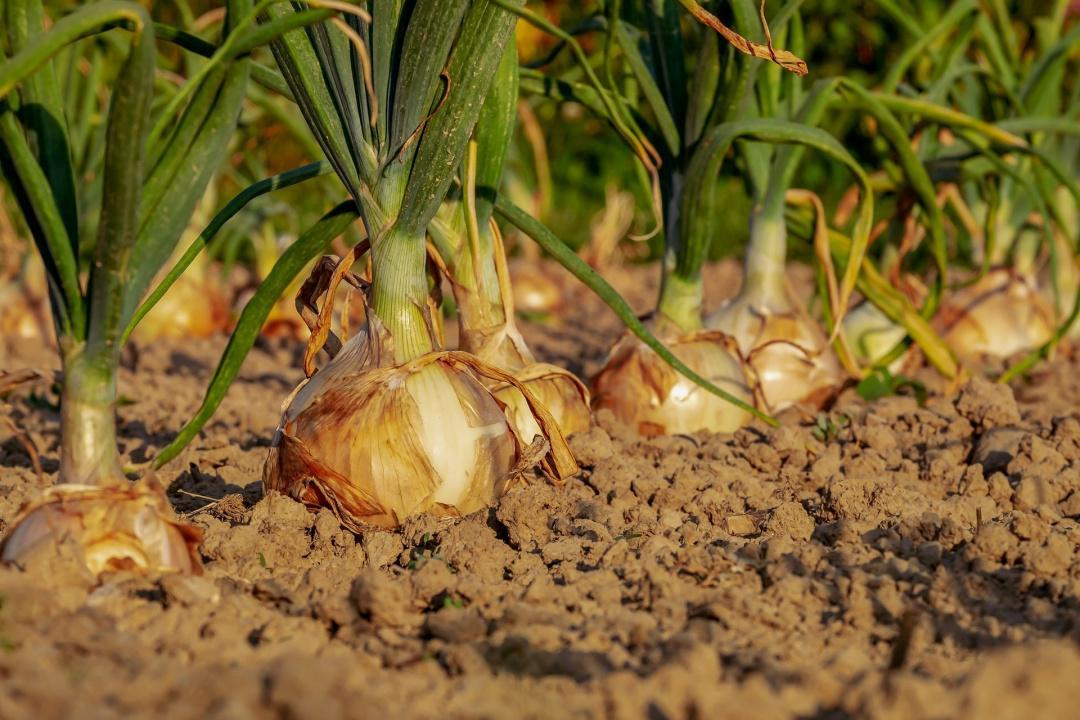
Global warming has become one of the most significant environmental issues directly affecting agricultural production in recent years. The increase in greenhouse gas concentrations in the atmosphere has led to rising average temperatures, changes in precipitation patterns, and a higher frequency of extreme weather events. These developments make agricultural planning more difficult and unpredictable. Dry onion, a crop cultivated widely around the world, is among the agricultural products that are particularly sensitive to these climatic changes because it requires specific temperature and moisture conditions to grow successfully.
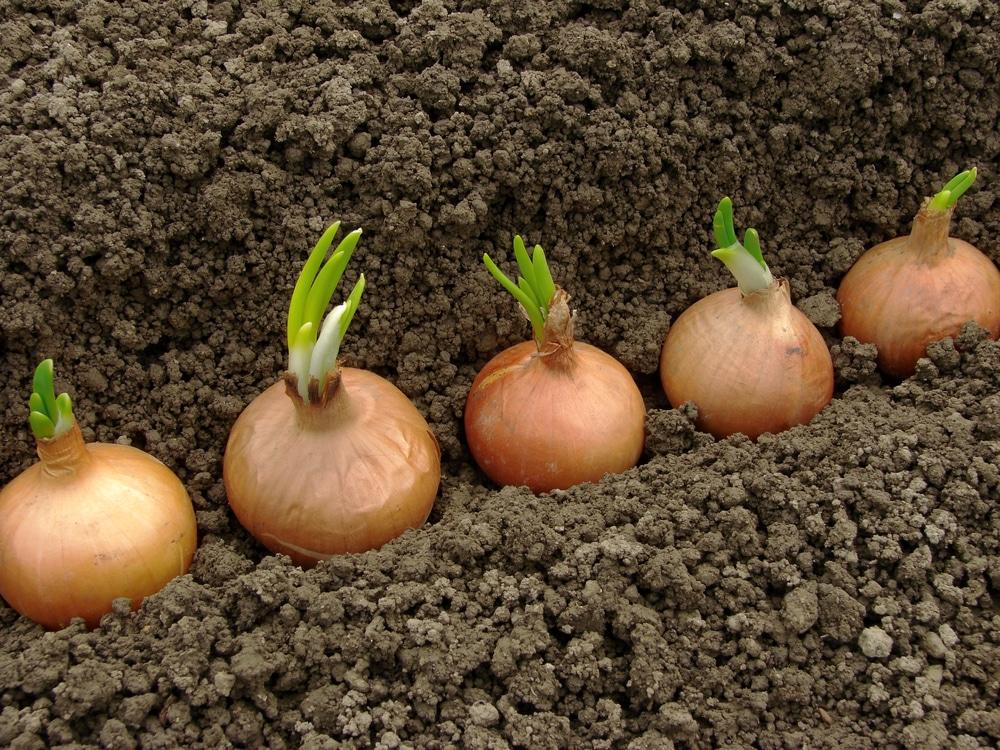
Temperature is one of the key factors determining the growth and development of dry onion. With global warming, higher average temperatures can cause stress during the early growth stages of the plant. Excessive heat during the seedling or onion set stage may negatively affect root development, resulting in weaker plants. As a consequence, bulb formation can be delayed, or bulbs may fail to reach the desired size. In addition, high temperatures increase the risk of early bolting, which reduces both yield and market quality.
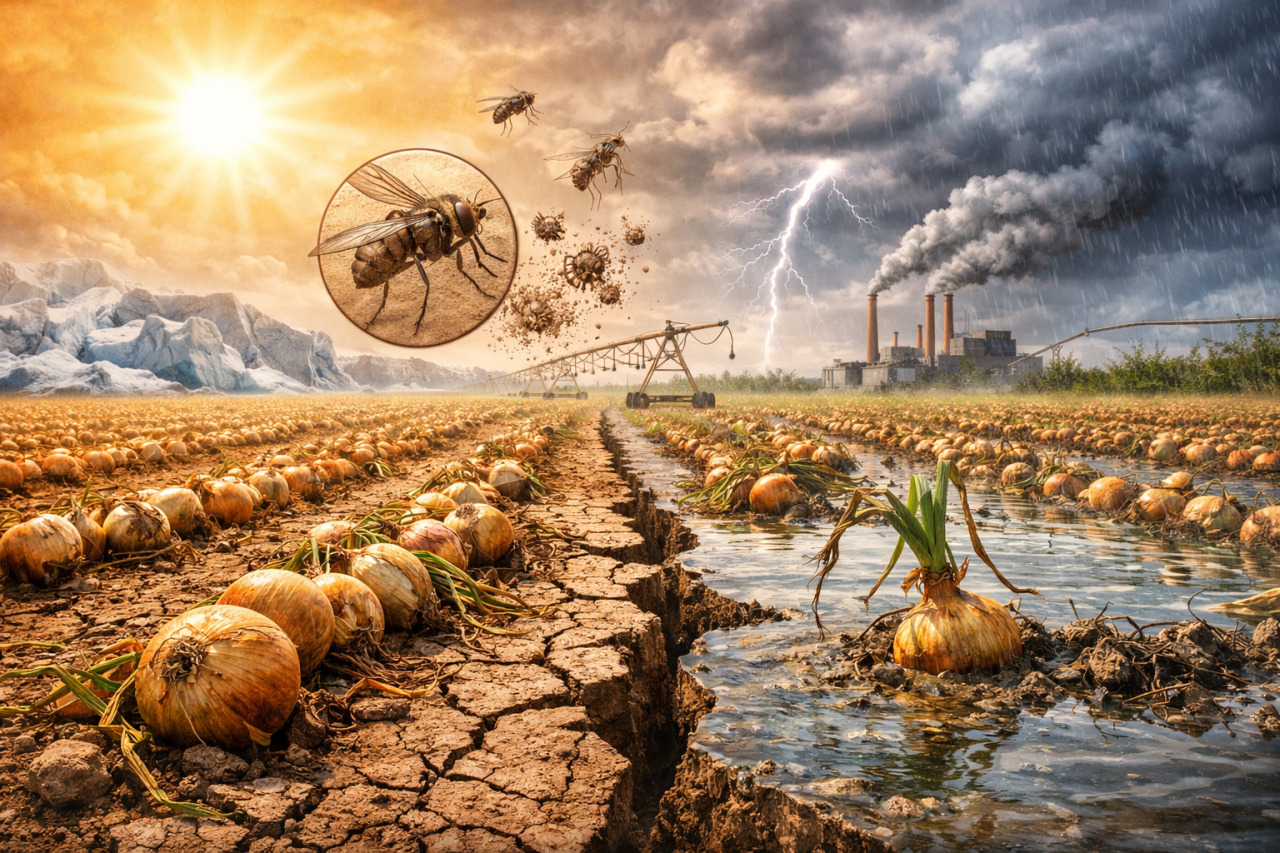
Changes in rainfall patterns are another major impact of global warming on dry onion cultivation. Prolonged drought periods increase the need for irrigation while putting additional pressure on limited water resources. Dry onion requires regular and adequate water supply, especially during the bulb development stage. When plants are exposed to water stress, yield losses, smaller bulbs, and poor skin quality are common outcomes. On the other hand, sudden and heavy rainfall events can lead to waterlogging in fields, increasing the risk of root rot and the spread of fungal diseases.
Global warming also directly influences the distribution and activity of pests and diseases. Rising temperatures allow pests such as onion fly and thrips to remain active for longer periods and expand into new regions. Similarly, fungal and bacterial diseases develop more rapidly under warm and humid conditions. As a result, farmers often face higher production costs due to increased pesticide use, along with greater environmental and health concerns.
Soil health is another critical aspect affected by climate change. Higher temperatures and irregular rainfall can reduce soil organic matter and disrupt the balance of beneficial microorganisms. This negatively affects nutrient uptake in dry onion plants, leading to declines in yield and quality. Increased evaporation rates also raise the risk of soil salinity, particularly in irrigated areas, which can further limit onion growth and productivity.
Despite these challenges, various adaptation strategies are being developed to reduce the negative effects of global warming on dry onion cultivation. The use of drought-tolerant onion varieties, the adoption of water-saving irrigation systems such as drip irrigation, and the adjustment of planting dates based on changing climate conditions are among the most effective measures. Practices that improve soil organic matter and integrated pest management approaches also play an important role in maintaining sustainable production.
In conclusion, global warming places significant pressure on dry onion cultivation in terms of both yield and quality. However, through climate-resilient agricultural practices and scientifically informed management strategies, it is possible to mitigate these impacts and ensure the sustainability of dry onion production in the future.
Temperature is one of the key factors determining the growth and development of dry onion. With global warming, higher average temperatures can cause stress during the early growth stages of the plant. Excessive heat during the seedling or onion set stage may negatively affect root development, resulting in weaker plants. As a consequence, bulb formation can be delayed, or bulbs may fail to reach the desired size. In addition, high temperatures increase the risk of early bolting, which reduces both yield and market quality.
Changes in rainfall patterns are another major impact of global warming on dry onion cultivation. Prolonged drought periods increase the need for irrigation while putting additional pressure on limited water resources. Dry onion requires regular and adequate water supply, especially during the bulb development stage. When plants are exposed to water stress, yield losses, smaller bulbs, and poor skin quality are common outcomes. On the other hand, sudden and heavy rainfall events can lead to waterlogging in fields, increasing the risk of root rot and the spread of fungal diseases.
Global warming also directly influences the distribution and activity of pests and diseases. Rising temperatures allow pests such as onion fly and thrips to remain active for longer periods and expand into new regions. Similarly, fungal and bacterial diseases develop more rapidly under warm and humid conditions. As a result, farmers often face higher production costs due to increased pesticide use, along with greater environmental and health concerns.
Soil health is another critical aspect affected by climate change. Higher temperatures and irregular rainfall can reduce soil organic matter and disrupt the balance of beneficial microorganisms. This negatively affects nutrient uptake in dry onion plants, leading to declines in yield and quality. Increased evaporation rates also raise the risk of soil salinity, particularly in irrigated areas, which can further limit onion growth and productivity.
Despite these challenges, various adaptation strategies are being developed to reduce the negative effects of global warming on dry onion cultivation. The use of drought-tolerant onion varieties, the adoption of water-saving irrigation systems such as drip irrigation, and the adjustment of planting dates based on changing climate conditions are among the most effective measures. Practices that improve soil organic matter and integrated pest management approaches also play an important role in maintaining sustainable production.
In conclusion, global warming places significant pressure on dry onion cultivation in terms of both yield and quality. However, through climate-resilient agricultural practices and scientifically informed management strategies, it is possible to mitigate these impacts and ensure the sustainability of dry onion production in the future.